
Mob Wars LCN: Mafia Empire RPG
Kano GamesRole Playing
4.51.49K Reviews
- Version
- 3.136.2
- Installs
- 5.00M
- Age Rating
- Teen
Screenshots
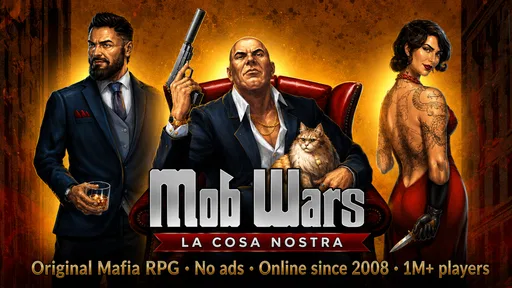
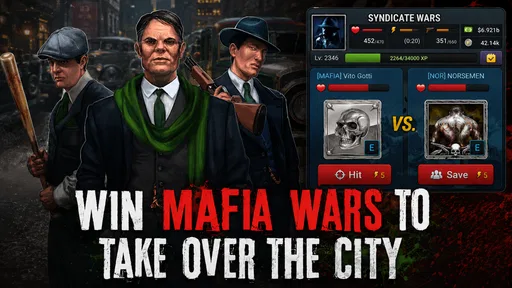
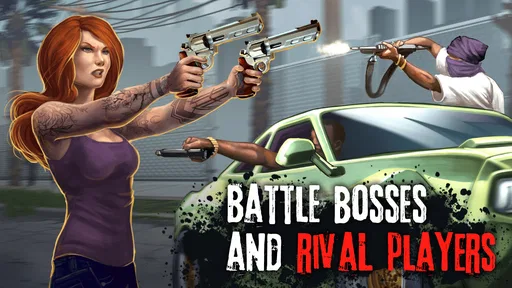
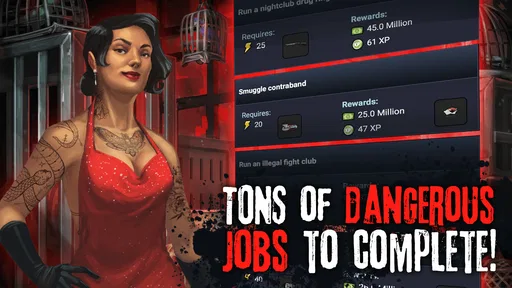

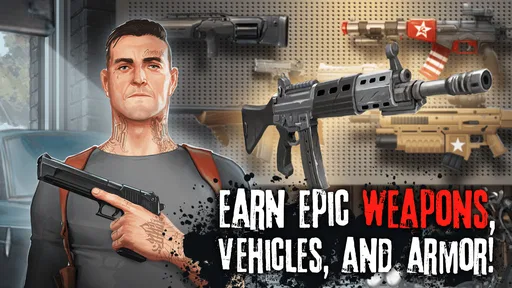
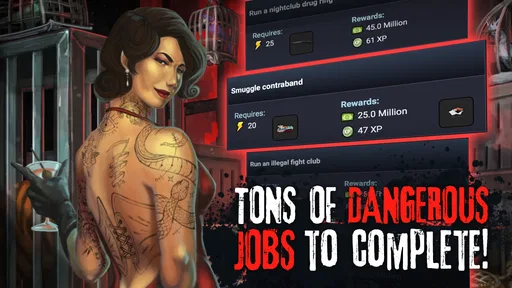
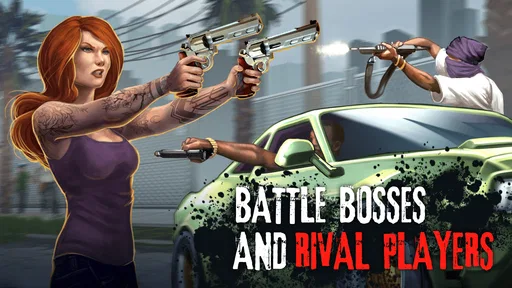
Our Review of Mob Wars LCN: Mafia Empire RPG
 Analysis by Appyee
I spent time with Mob Wars LCN: Mafia Empire RPG as a mobile role-playing game built around criminal-world progression, rivalries, and the gradual expansion of a personal mob. Its basic idea is easy to understand: you begin with a limited operation, make decisions that improve your position, and work toward becoming a more powerful figure in the underworld. What makes it interesting is not a complicated control scheme, but the way small choices can shape how quickly your empire develops.
This is a free game from Kano Games, available for players using Android 7.0 or later. It is aimed at a Teen audience, and the current version is 3.136.2. The game has reached over five million installs, with an average score of 4.5 from around thirteen thousand ratings and about one and a half thousand written reviews. Those figures suggest that it has found a substantial audience, but they do not tell you whether its style will suit you. In my experience, the important question is whether you enjoy a steady, menu-driven mob RPG or prefer a faster action game with direct movement and combat.
How the mafia RPG loop feels in everyday play
The central appeal is the feeling of building something that starts small and becomes more influential. Rather than relying on reflexes, the game asks me to think about progression, timing, and how I want to use limited opportunities. That makes it a comfortable choice for short sessions. I can check in during a break, make a few decisions, review my position, and leave without needing a long uninterrupted block of time.
A realistic use case is a commute or lunch break. I might open the game, collect the results of earlier decisions, improve an area of my operation, and decide whether to push toward another confrontation or wait until my position is stronger. That rhythm is more suitable for someone who likes planning than for someone looking for a quick action burst. The criminal theme gives those routine choices a clear identity, even when the underlying activity is mainly about managing progress.
The role-playing label matters here. The enjoyment comes from developing an identity inside the mob world and watching that identity gain influence, not from controlling a character through a detailed three-dimensional environment. If you expect a console-style crime adventure with driving, shooting, or open-world exploration, this is the wrong expectation. Its appeal is closer to a persistent strategy-flavored RPG where the empire is the main character.
I also found that the theme works best when I treat the game as a long-term hobby rather than a single dramatic campaign. The satisfaction is cumulative. A choice that seems minor during one visit can matter more after several sessions because it contributes to a broader sense of growth. That approach rewards patience, while players who need constant novelty may find the routine less exciting over time.
Progress is satisfying, but the pace needs discipline
The first useful habit is to avoid spending every available resource as soon as it appears. In a game centered on building a mob, immediate gains can be tempting, but saving for a more meaningful improvement often produces a better feeling of control. I recommend deciding what your next important target is before making smaller purchases or upgrades. This prevents the common problem of reaching a promising point and then discovering that your resources have been scattered across several less useful choices.
A second practical tip is to use short sessions deliberately. I would not open this game expecting every visit to deliver a major breakthrough. Instead, I treat each session as one step in a larger plan: review what has changed, choose one priority, and stop when that priority is handled. That approach reduces the sense of waiting around and makes the slower parts of progression easier to accept.
The trade-off is that a persistent progression game can create pressure to return regularly. The more invested I become in my mob, the more noticeable it feels when I ignore it for a while. That is not automatically a flaw, but it is worth recognizing before starting. If you prefer games that are completely self-contained and equally rewarding whether you play once a week or several times a day, this structure may feel demanding.
Another limitation is that the long-term loop may become more important than the individual decisions. Players who enjoy carefully comparing options will have more to think about than players who simply want a quick reward. I found the game more enjoyable when I accepted that some progress would be gradual. Trying to force constant advancement made the experience feel more pressured than it needed to be.
Free entry does not mean every choice feels free
The game can be downloaded and played without an upfront purchase, but it includes optional purchases priced from $1.99 to $99.99 per item. That range is important for anyone judging the experience fairly. The free starting point makes it easy to test the core loop, while the presence of expensive individual items means I would set a personal spending limit before getting deeply involved.
I do not see a reason to spend immediately. My preferred approach is to play long enough to understand the normal rhythm first. If I enjoy the game without paying, I can then decide whether a purchase is genuinely improving my experience or merely helping me move past a moment of impatience. That distinction matters in a progression-focused RPG, where the desire to advance can make an optional purchase feel more necessary than it really is.
For younger players, the Teen rating and the purchase range make parental awareness sensible. A free download can still lead to meaningful spending if payment controls are not handled carefully. I would recommend checking the device’s purchase settings before handing the game to a child or allowing unsupervised play. That is practical preparation, not a judgment about the game’s quality.
There is also a psychological trade-off for adults. If you enjoy earning progress slowly, purchases may be easy to ignore. If you are highly competitive or dislike falling behind, the availability of paid items can make the experience feel less relaxed. I would therefore describe the game as best suited to players who can separate enjoyment from speed. The ability to wait is a real advantage here.
Where competition feels fair, and where caution is sensible
The idea of dominating rivals gives the game a competitive edge, but competition is most enjoyable when I focus on improving my own decisions rather than measuring every moment against someone else. Building a stronger mob should feel like a personal project first. That mindset helps keep the game entertaining even when progress is uneven.
Fairness is harder to judge from the theme alone. A game can present rivalry without making every encounter a direct test of skill, and the existence of in-app purchases means players should not automatically assume that all progress happens under identical conditions. I would not promise a perfectly level playing field. Instead, I would advise treating competitive standing as one part of the experience, not the only reason to play.
One useful way to protect the competitive side of the game is to define your own success markers. For example, I might aim to improve my empire efficiently, make better use of resources, or reach a personal milestone without spending. Those goals give me something meaningful to work toward even if another player advances faster. They also make the game less vulnerable to the frustration that comes from comparing a free-play route with a spending-heavy route.
This is where the game differs from many action-oriented alternatives in the same broad category. In a fast combat RPG, I can often point to timing, aiming, or execution as the reason I won. Here, the satisfaction is more connected to planning and persistence. If you want competition based mainly on quick reactions, a real-time battle game will probably feel more transparent and exciting. If you enjoy watching a long-term operation take shape, this format may suit you better.
I also think the mafia setting changes how competition feels. Rivalry is not presented as a heroic quest or a fantasy party adventure; it is tied to influence, criminal ambition, and the growth of an organization. That makes the game more distinctive than a generic leveling system, but it also means players who dislike crime-themed role-playing may not connect with its tone even if they enjoy management mechanics.
Questions I would ask before committing time or money
The first question is whether the game is suitable for someone who wants a completely free experience. My answer is that it is reasonable to begin without paying, but players should not confuse free access with a promise that every route to progress will feel equally quick. Since purchases are available across a broad range, I would play first, decide what kind of pace I enjoy, and keep spending strictly optional in my own routine.
The second question is whether it works for short sessions. Yes, that is one of its strongest practical qualities. The structure is a better fit for checking in regularly than for sitting down to play a long action sequence. I would recommend it to someone who likes progress that can be managed around a busy day, provided that person is comfortable with a gradual rhythm.
The third question is whether it replaces a traditional crime game. It does not. The experience is about running and developing a mob rather than exploring a detailed city or acting out a cinematic storyline. Players searching for open-world freedom should look elsewhere. Players who want a focused mafia-themed RPG with a persistent sense of advancement may find this narrower design more convenient.
The fourth question is whether the Teen rating makes it appropriate for every player. The rating makes the intended audience clear, but personal comfort with criminal themes still matters. I would consider the tone before recommending it to a younger teenager, and I would pair that decision with device-level controls because of the optional purchases.
The final question is whether the current version is worth trying if I am joining late. The game is established rather than brand new, and its version number is 3.136.2. For me, that is a reason to expect a developed, ongoing experience rather than a brief experiment. It also means I would approach it with realistic expectations: the value is in settling into its long-running progression, not in expecting a completely fresh design built around one short campaign.
Who should play it, and who should skip it
I would recommend this game to people who enjoy criminal-world themes, incremental empire building, and role-playing systems that reward returning over time. It is especially suitable for players who like planning their next move during small pockets of free time. The free entry makes testing the basic experience straightforward, and the large existing audience suggests that the format has lasting appeal for many mobile players.
I would be more cautious about recommending it to someone who dislikes waiting, menu-based progression, or optional purchases in free games. It is also not my choice for a player who wants direct action, detailed exploration, or a story that moves forward at a fixed cinematic pace. Those players would probably be happier with an action RPG or a conventional single-player crime adventure.
My strongest advice is to decide in advance what “winning” means for you. If it means enjoying the growth of a mob without spending, keep that as the goal and resist treating every rival as a deadline. If it means reaching the top of a competitive environment as quickly as possible, the purchase system may become a source of pressure. The same game can feel relaxed or stressful depending on that personal target.
My trust verdict after weighing the trade-offs
Mob Wars LCN: Mafia Empire RPG earns my recommendation as a specific kind of mobile role-playing game, not as an all-purpose substitute for every mafia or RPG title. Kano Games has built its appeal around a clear fantasy: start with a modest criminal operation, develop your mob, and work toward greater influence. The concept is easy to understand, and the short-session format makes it practical for everyday play.
My trust in the experience comes with a condition: I would keep spending controlled and treat competition as optional motivation rather than proof of personal skill. The purchase range from $1.99 to $99.99 per item deserves attention, especially for families and players who are sensitive to progression pressure. I would not spend until I had played enough to know whether the normal pace was enjoyable on its own.
Overall, I see it as a good fit for patient players who enjoy persistent mob-building and strategic choices in small doses. Its weaknesses are equally clear: the pace may feel slow, competition may not feel equally comfortable for every spending style, and the game will disappoint anyone expecting an action-heavy open world. If those limits match what you want, the free starting point makes it worth trying. If they do not, choosing a more direct RPG will save you time and frustration.
Verdict
Strengths of Mob Wars LCN: Mafia Empire RPG
- Easy-to-learn mafia RPG mechanics for quick, casual sessions.
- Large criminal empire theme with plenty of progression goals.
- Regular events add variety beyond the standard missions.
- Alliance features make cooperation and competition more engaging.
- Runs well on many older Android and iOS devices.
Limitations of Mob Wars LCN: Mafia Empire RPG
- Energy limits can interrupt missions and slow down progression.
- Frequent timers encourage repeated check-ins throughout the day.
- Competitive advantages may favor players who spend real money.
- The interface can feel crowded for new players.
- Some gameplay tasks become repetitive after extended play.
Other Releases by Kano Games
View All
Idle Distiller Tycoon
Simulation4.4
Similar Picks in This Category
View All
Hair Dye
CrazyLabs LTD4.4

Monster High™ Beauty Salon
CrazyLabs LTD4.5

Bus Simulator - Bus Games 3D
Jima Apps4.4

Flight Pilot: 3D Simulator
Wildlife Studios4.1


Super Stylist Fashion Makeover
CrazyLabs LTD4.4
Frequently Asked Questions
What is Mob Wars LCN: Mafia Empire RPG?
Mob Wars LCN: Mafia Empire RPG is a browser-style mafia strategy and role-playing game for mobile devices. You create and develop a criminal empire, complete missions, build a crew, collect resources, acquire properties, and compete against rival players. Progress depends on planning, upgrading your character, managing your mafia family, and choosing when to attack or defend.
Is Mob Wars LCN: Mafia Empire RPG free to download and play?
The game can generally be downloaded and played for free, but it includes optional in-app purchases. These purchases may provide premium currency, faster progression, extra energy, or other convenience items. You can enjoy the main gameplay without paying, although free players may need more patience when waiting for timers, recovering energy, or competing with highly active players.
Does the game require an internet connection?
Yes, Mob Wars LCN: Mafia Empire RPG is designed as an online game and normally requires an active internet connection. Missions, player-versus-player battles, events, rankings, purchases, and account progress are connected to the game servers. Because of this, it is not a suitable choice for completely offline play, and connection quality can affect loading and battle interactions.
Can I play against other real players?
Yes. A major part of the experience involves competing with other players and their mafia families. Depending on the available features and events, you may attack rivals, defend your territory, join a crew, participate in competitions, and compare your progress on leaderboards. Multiplayer competition adds excitement, but stronger or more advanced opponents can make progression challenging.
Is Mob Wars LCN: Mafia Empire RPG suitable for children?
The game is aimed more at teenagers and adults because it focuses on organized crime, violence, weapons, criminal missions, and competitive attacks. It may also contain advertising, social interactions, and optional purchases. Parents should check the current age rating for their region, review device spending restrictions, and decide whether the mafia-themed content is appropriate before allowing younger players to download it.
Play our best games!


